
The Story of No Man’s Land – 1968 to today
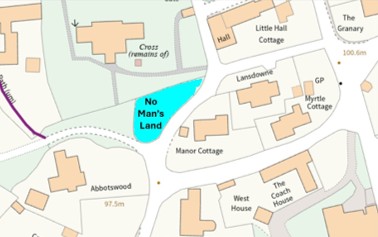
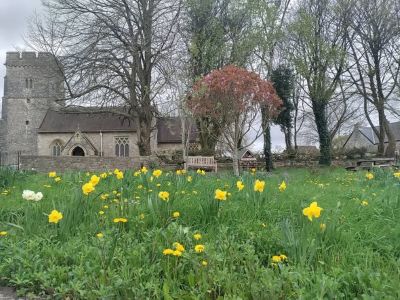
No Man’s Land might be a small piece of ground at the heart of St Hilary, but it carries a story that stretches back decades and reflects the life of the village itself. From its formal recognition as common land in 1968 to the many small acts of care, planting, gathering and celebration since, it has quietly remained a shared space shaped by those who live here. This short note brings together what we know of its history and status and invites you to reflect on its place in village life today – and maybe how we might look after it for the future.
Legal Status
The first recorded mention we can find of No Man’s Land is in the London Gazette dated 22 October 1968 (CL102):
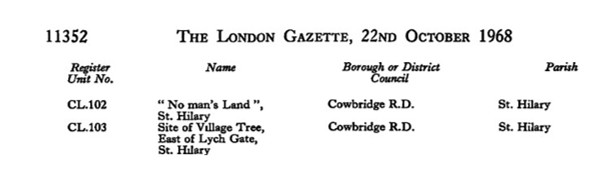
The entry also references the Village Tree east of the Lych Gate, which is the area in front of Little Hall Cottage which is also registered common land (CL103) – more about the controversy surrounding that tree later!
Before 1965, there was no systematic national register of commons or village greens. The ownership or rights of public access to many open spaces and small plots of land was often not clear. The Commons Registration Act 1965 created:
• A register of common land and village greens in each county
• A legal process for recording land, rights, and access
• The principle that once land was registered, it had legal protection from development
Registration didn’t necessarily give ownership to the public, but it recognized the land’s special status. When the London Gazette published an entry, it was part of the official process of documenting the land and its name under the Act. Once a parcel was recorded in the register of commons and village greens:
• It gained legal recognition
• It could not be developed without special procedures
• Rights of villagers or the public for access and recreation were protected
Its registration in 1968 provides a legal record that it is publicly recognized as a village green / common land and even if a land registry search may show it as “unregistered land” or part of a larger title, the Commons Register is the definitive legal record for this area.
In summary, the 1968 Gazette notice is the official recording of the village green under the 1965 Act:
• “No Man’s Land” is local name for the green in front of St Hilary Church
• The land is protected its village green status is recognised
• Whoever owns the land, the rights of the public are legally acknowledged
Timeline since 1968
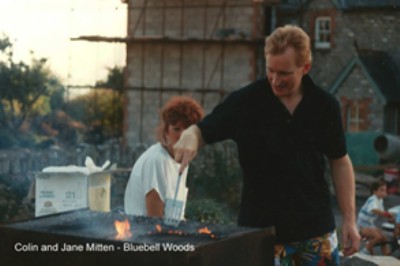
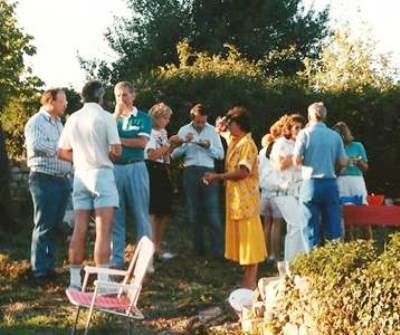
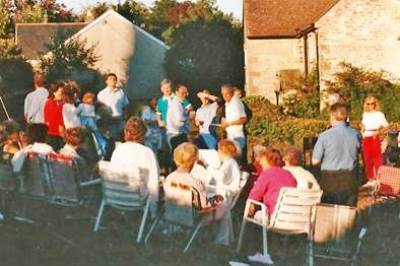
1989: A BBQ was held on No Man’s Land
www.sthilary.org.uk/memories/events/bbq1989
1990: Best Kept Village committee meeting notes
"No Man’s Land is in hand. Vegetation is dying back after the first systemic treatment. This will have to be repeated before rotovating can take place, followed by seeding with grasses and meadow plants. The Prince of Wales committee has kindly provided a plan [see below]. We are indebted to the committee for their grant towards our costs. This is a long-term project (3-4 years) and when completed will need perpetual maintenance. For the Best Kept Village competition judging a simple notice will be displayed to show what is being done."
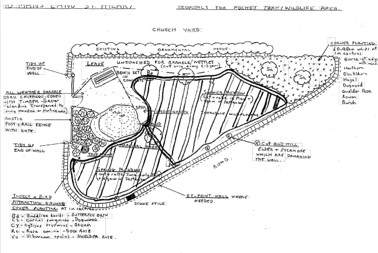
The plans never came to fruition, but we did win the Best Kept Village competition!
www.sthilary.org.uk/memories/news/bestkeptvillage
Early 2000s
Lorraine Ravey (Lansdowne) purchased an artificial pump, and the Village Hall Committee commissioned a Pump Garden stone plaque.
2013
A meeting was held in August 2013 of the Millennium Committee to discuss the closing of St Hilary 900 accounts. It was agreed that the money should be spent on No Man’s Land to create a new fence, provide a gate and generally tidy up the area.
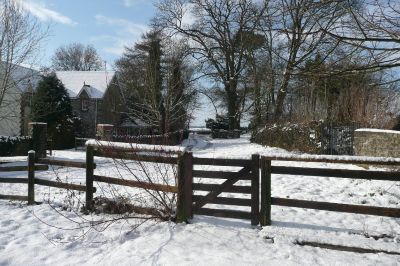
Unfortunately, the fence and gate rotted and had to be removed.
2015 WI tree
To celebrate the Centenary Year of the Women's Institute, St Hilary WI planted an acer tree on No Man's Land on 16 September 2015 - the date in 1915 that the first WI meeting took place in Llanfairpwllgwyngyll (Llanfair PG) on the Isle of Anglesey. Members gathered for a ceremonial planting, complete with commemoration plaque. A celebratory toast then took place at The Bush Inn.
www.sthilary.org.uk/memories/events/sthilary2000
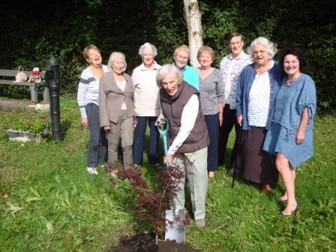
(Note: The original tree failed to thrive, so on 1 October 2019 a replacement tree was planted.)
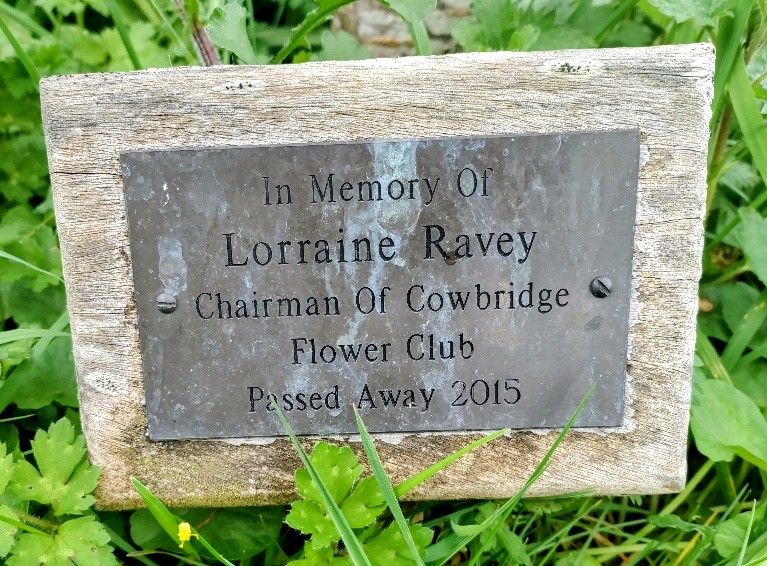
Also, in 2015 or sometime later, a memorial tree to Lorraine Ravey was planted.
2017 Daffodil planting
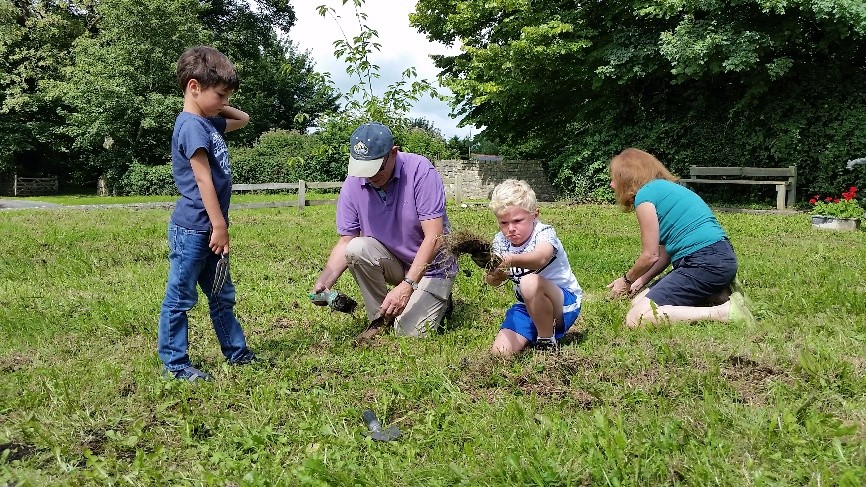
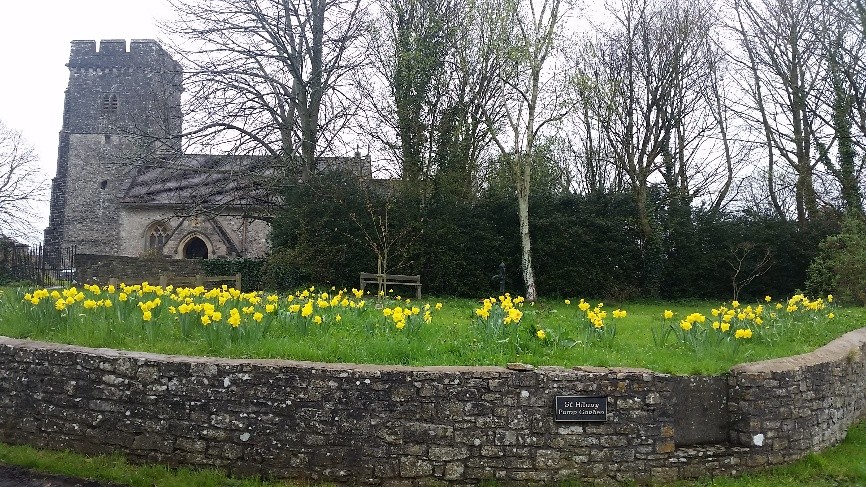
Daffodils, donated by villagers were planted on No Man’s Land
www.sthilary.org.uk/memories/villagers-stories/daysinlife
2020 Carols around the village
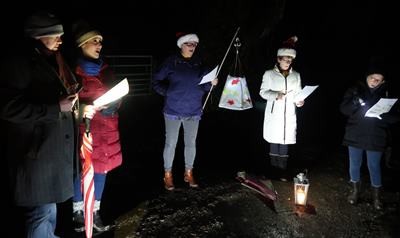
Because of the coronavirus pandemic, Winter's Eve 2020 was very different from previous years! We couldn’t have carol singing in the village hall, so we took them around the village! Stephanie Edwards and Shaun Dixon entertained villagers on Friday, 11 December 2020 with the stunning Carols Round the Village, aided and abetted by Marged, Pat, Caroline and Monica.
www.sthilary.org.uk/memories/events/winterseve2020
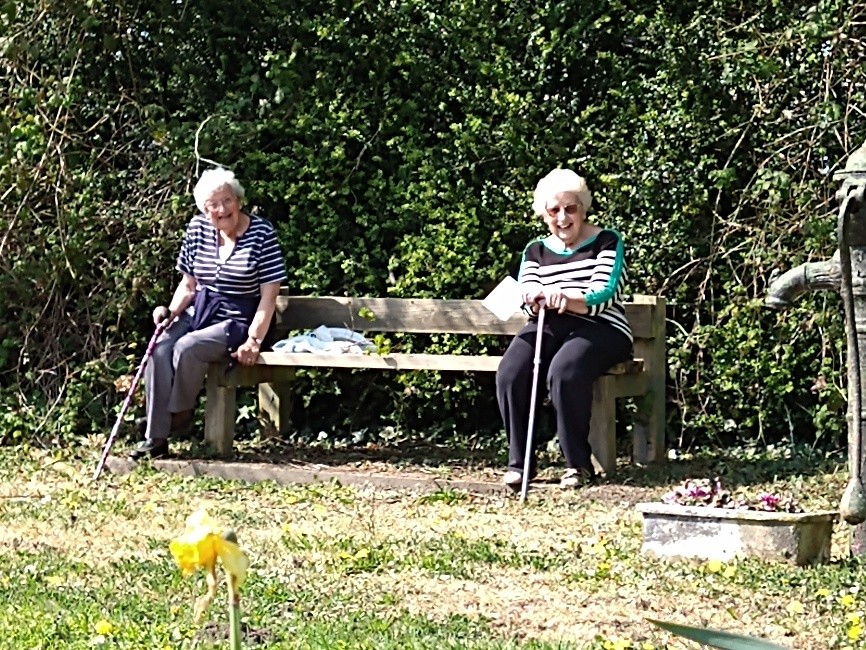
The bench in No Man’s Land was a good place for villagers to meet, whilst keeping socially distanced!!
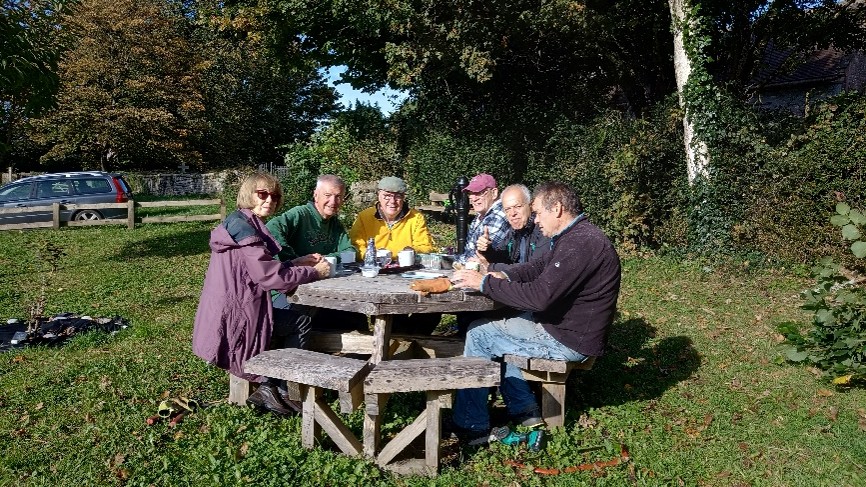
2022 Picnic Table
Purchased through the monies gifted to the village by the BBC for the filming of Dr Who, Caroline Neudegg arranged for a picnic table for No Man’s Land in March 2022. The materials were sourced locally from Coed Hills.
2025 Hedge laying, bug hotel, wildlife habitat and replacement bench
2025 was a busy year in No Man’s Land.
First, in May, 3Cs cleared the scrub between No Man’s Land and the Church and then laid the hedge.
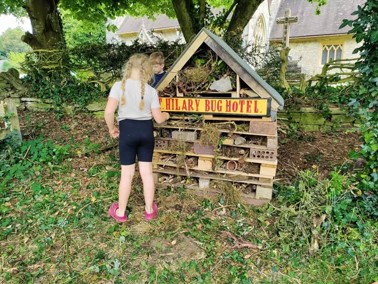
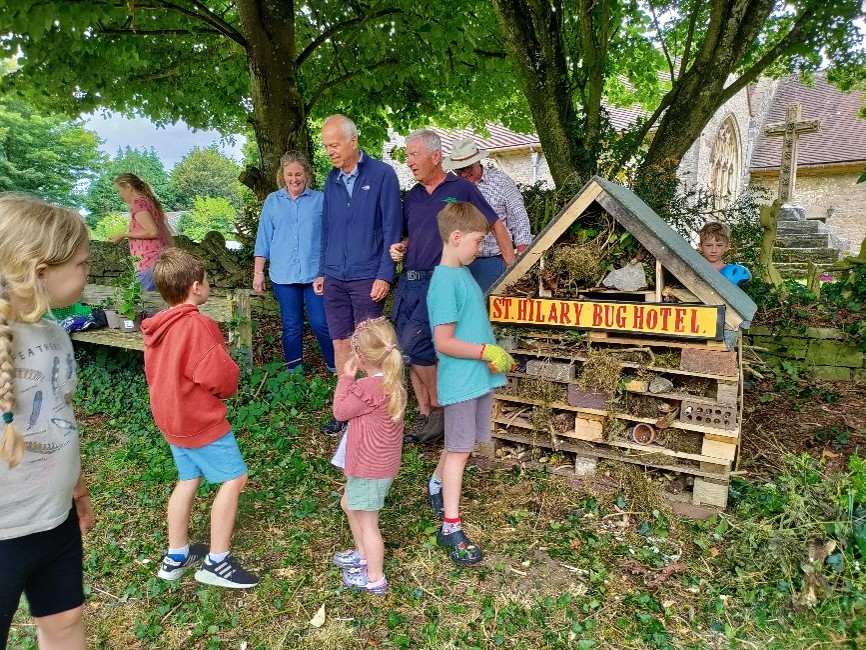
In July, the Bug Hotel was installed, and the children of the village held a wonderful bake sale to raise funds for the village.
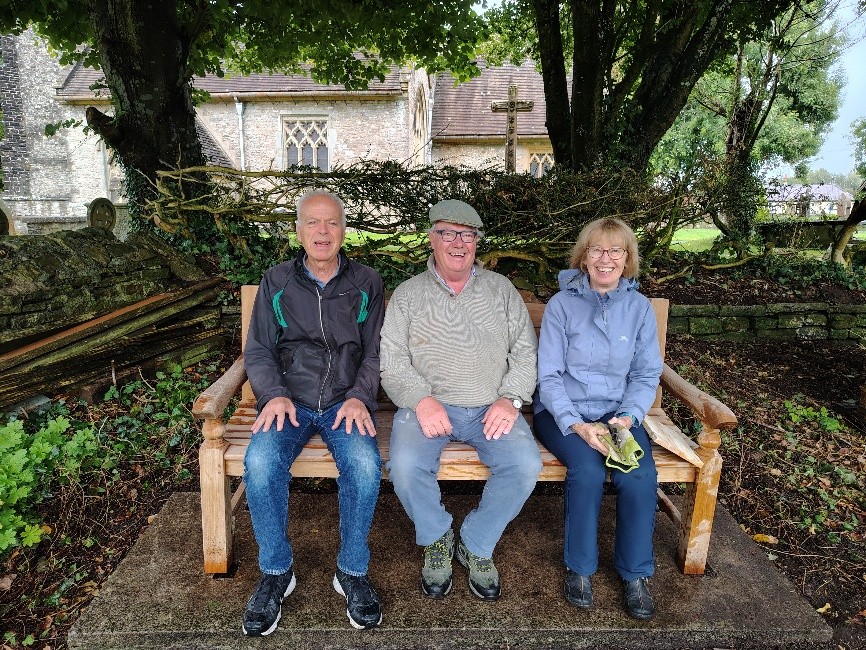
And in September 2025 a replacement bench was installed. Sue Evans, who lived in the Granary, left £1,000 in her will to the St Hilary Churchyard Mowers, a volunteer group who keep the churchyard looking respectable throughout the year and make a special effort before weddings and funerals. Sue’s close friend and neighbour, Rae Kitchen, designed a rose that was engraved on the backrest.
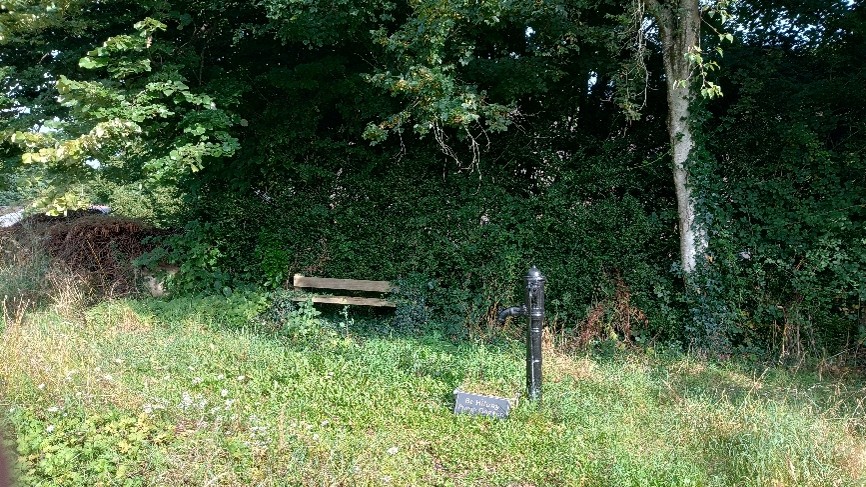
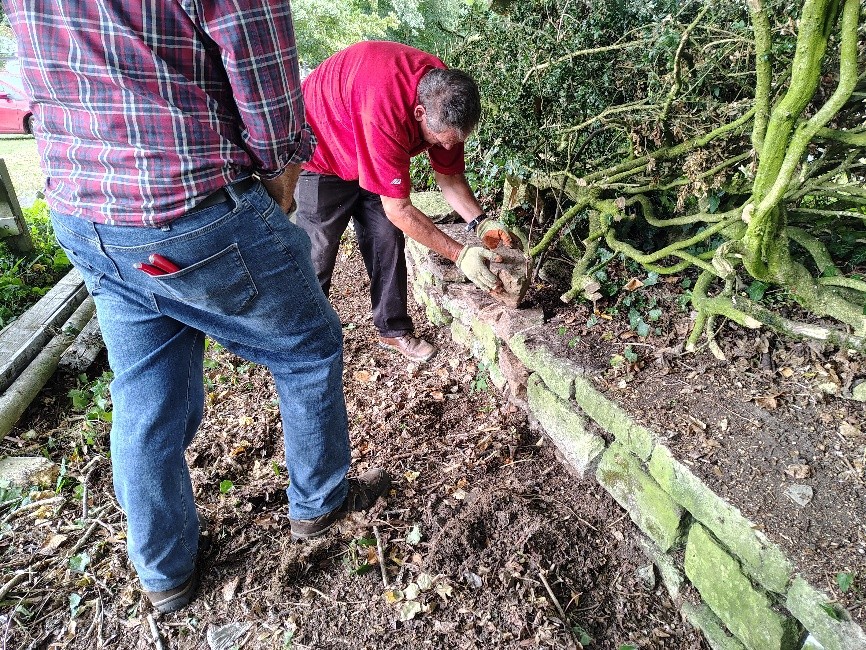
Later in the year 3Cs returned and gave No Man's Land a makeover:
- stone wall repaired
- vegetation and detritus cleared
- habitat pile created
- overhanging branches removed
- hole filled in
- grass cut
- verges strimmed
- hedges trimmed
Before
During
After
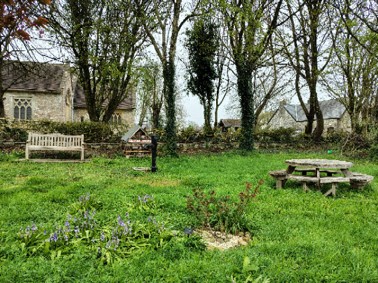
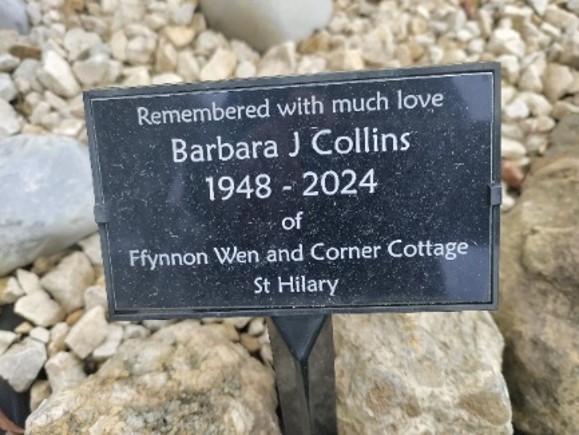
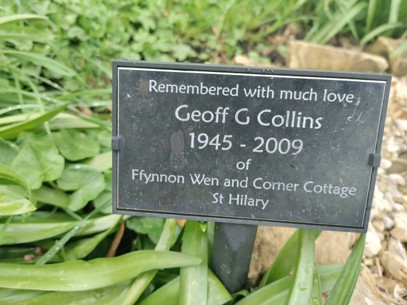
In 2024 a rose was planted in memory of Barbara Collins, formerly of Ffynnon Wen and Corner Cottage. It grows a short distance away from a rose planted by Barbara in memory of her husband Geoff who died in 2009.
The Future
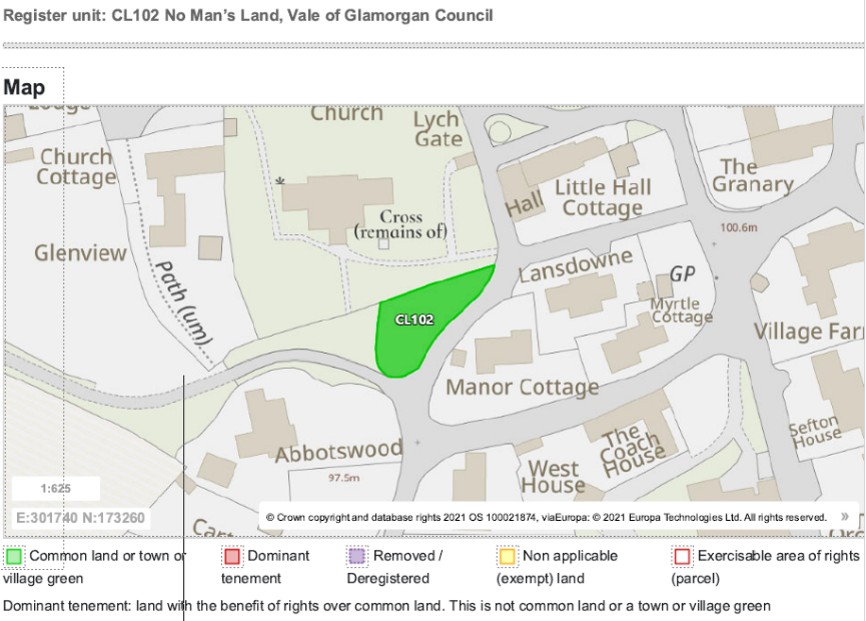
The future of No Man’s Land is secure as a recent enquiry to the Land Registry Department of the Vale of Glamorgan Council shows that it is officially recognised as common land (as is the triangle outside the Village Hall).
So, looking ahead, No Man’s Land has a secure future as a protected and much-loved part of St Hilary. Its legal status helps safeguard it for future generations, ensuring this small but important green space remains at the heart of village life. As both a place for people and for nature, it can continue to evolve gently: somewhere for children to explore, neighbours to gather, community activities to take place, and quiet moments to be enjoyed. At the same time, the recent focus on habitats, planting and wildlife-friendly management means it can increasingly become a haven where birds, insects and native plants can thrive.
No Man’s Land has always reflected the spirit of the village – cared for collectively, adapted over time, and valued by those who call St Hilary home – and there is every reason to believe that will continue long into the future.
Footnote: the controversy about the tree outside the Village Hall!
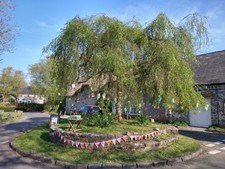
On 9 April 2020 we received a message from Christine Frederick, a former resident of the village, saying “Thank you for posting this. [a picture of the weeping birch outside the village hall – see below]. My Grandad, Evan Frederick, planted it after the old oak tree (which we called “the round tree” for obvious reasons) was cut down overnight and caused uproar with the established residents. My Grandad was a gardener around St Hilary. My grandparents lived at 1 Church Crescent and are buried in the churchyard, as are my parents. It is lovely that you are using it as a symbol of hope.”
The St Hilary Tree of Good Wishes (April 2020)
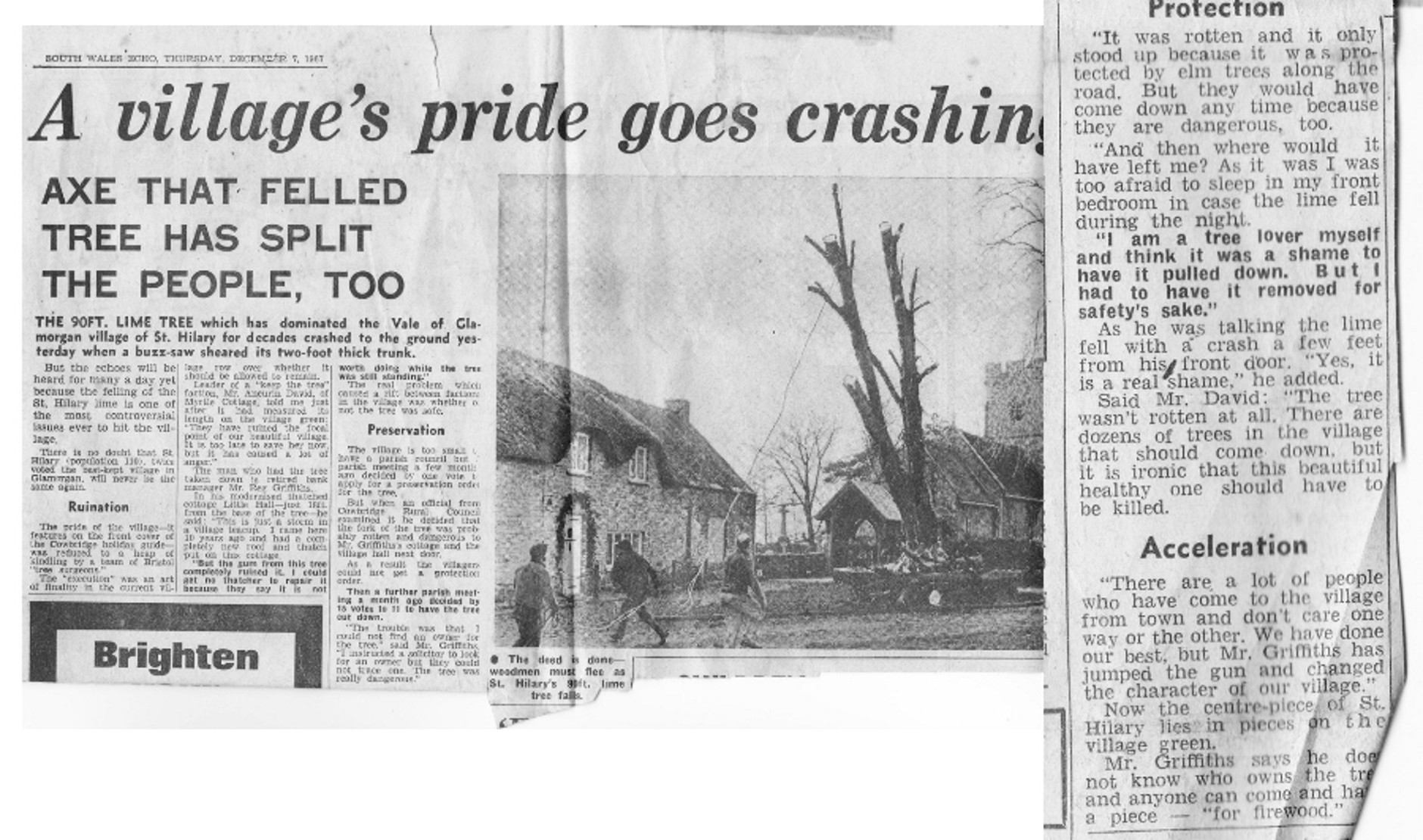
These are responses that were received after posting details of this article on the village Facebook page in May 2026
Alicia Moss
“I remember the lime tree mentioned in the news article at the end of the link. There were also two lime trees on the Greysol - the piece of land opposite the pill box at the end of what is now called the Granary (formerly stables and hayloft when still part of The Farm). The Greysol was unfenced and apparently unclaimed when I was a child, a shady place in summer, and a pleasant open space”.
Guy Thomas
As a boy, I always thought the Greysol was common land too. The lower branches on those trees were just a bit high for me to climb, unlike those of the conker tree on the apex of the wall where the road forks as it enters the village from the north.
Caroline Arnold
“I remember climbing that tree Guy when I was young”.
Terry and Monica Dennis, May 2026